


Hey! This is issue #11 of the Sheila Heti Summer Slow Read, a five month journey through the novel Motherhood. New episodes drop every Sunday from May-September, 20 issues in total. If you want to start at the beginning or read more about what the hell we’re doing here, head on over to issue #1.

Today’s guest is my delightful friend Maddy (31, not a mother but would like to be one someday, got married last year). Maddy runs circles around me when it comes to how many books she can read in a year, and she is also the friend I call when I want to get coffee and yap for a few hours. I was thrilled when Maddy picked this prompt to talk about because it’s the weirdest one by far, and it makes sense that a former English teacher (and writer!) would totally be down to talk about the nuances of language and weird double negatives. You might read this section and go huh??? which is exactly what I did the first time I read it, but we’re breaking it down and explaining why we both gravitated towards it.

#11. Not ‘not a mother’ (pages 157-158)
“Barcelona was governed in the Middle Ages by an oligarchy of nobles, merchants, shopkeepers, and artisans, who formed the Council of One Hundred. This council had to answer to the king, but the king did not rule absolutely. He was seen to rule by contract and not by divine right. The leaders of the council swore him this oath: We, who are as good as you, swear to you, who are no better than us, to accept you as our king and sovereign, provided you observe all of our liberties and laws – but if not, not.
From that, R.B Kitaj took the title of his painting of Auschwitz, If Not, Not. What is this idea of not not?
Are you going to have a child? If I do, I do – and if not, not. I… who am as good as you… will accept you… provided you observe… all of our liberties. And I don’t want ‘not a mother’ to be part of who I am – for my identity to be the negative of someone else’s positive identity. Then maybe instead of being ‘not a mother’ I could be not ‘not a mother. I could be not not.
If I am not not, then I am what I am. The negative cancels out the negative and I simply am. I am what I positively am, for the not before the not shields me from being simply not a mother. And to those who would say, You’re not a mother, I would reply, ‘In fact, I am not not a mother.’ By which I mean I am not ‘not a mother.’ Yet someone who is called a mother could also say, ‘In fact, I am not not a mother.’ Which means she is a mother, for the not cancels out the not. To be not not is what the mothers can be, and what the women who are not mothers can be. This is the term we can share. In this way, we can be the same.” – Sheila Heti, Motherhood
Here’s a bit about the painting Sheila mentioned:
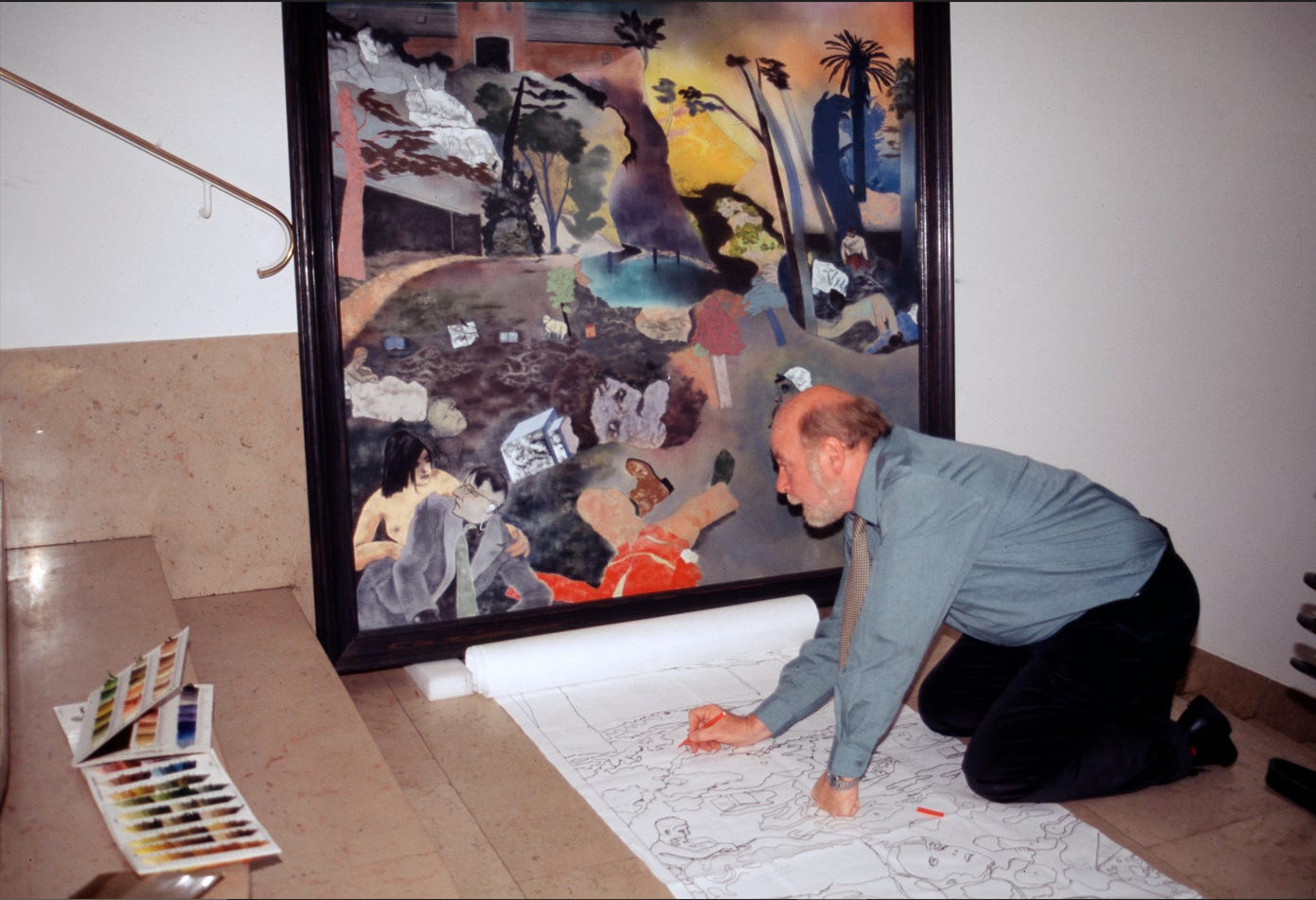
This is probably Kitaj's best-known and most complex work. The artist stated that the painting related to T S Eliot's poem 'The Waste Land'; the poet is depicted at the bottom left, wearing a hearing aid. The building in the top left corner is the gatehouse to Auschwitz. Below it lies a scene of cultural disintegration and moral collapse. The stagnant water, the dead and blackened trees, and the books scattered about the landscape, speak of death and destruction. A Matisse bust (coincidentally a variant of the one owned by the gallery) lies broken in the centre foreground. The small figure of the man in bed, holding a baby, is a self-portrait.
Timestamps:
0:20 – Introductions
1:50 – Introducing today’s (really strange) prompt and reading the excerpt from the book
5:00 – Maddy’s reaction to the prompt and why she chose it, including some thoughts on labels and identities
6:30 – Being the negative of someone else’s positive identity, and the failures of the English language
11:00 – More about the term Sheila says we can both share, and how maybe that’s hopeful and inclusive
13:20 – How Maddy feels similar and different from her friends with kids, and how interactions with kids and parents makes her feel (especially in relation to her identity)
16:40 – The idea of change and not being in control
19:20 – From a teacher’s POV, are the parents worse than the kids?
21:30 – Maddy got married last year – have people started asking her when she’s going to have kids? (Yes)
27:00 – Historical/societal context, including that parenthood is now an “if,” and not a “when”
31:00 – Why Maddy doesn’t have a deadline or a timeline
34:00 – A bit of a hopeful note to end on (about how maybe we’re all more similar than we are different, and trending in a more inclusive direction)
Listen to this episode with a 7-day free trial
Subscribe to THE OPT OUT to listen to this post and get 7 days of free access to the full post archives.


